AI Image Combiner

Pet AI Generator

Use a clear pet photo and a separate scene or costume reference to create a new portrait while telling the model which markings, features, and proportions must stay recognizable.

Create with two images

Output quality
Advanced settings

Daily credits are always used first. Files expire after 24 hours.

Explore AI Creations

Inspiration examples, not your generated result.

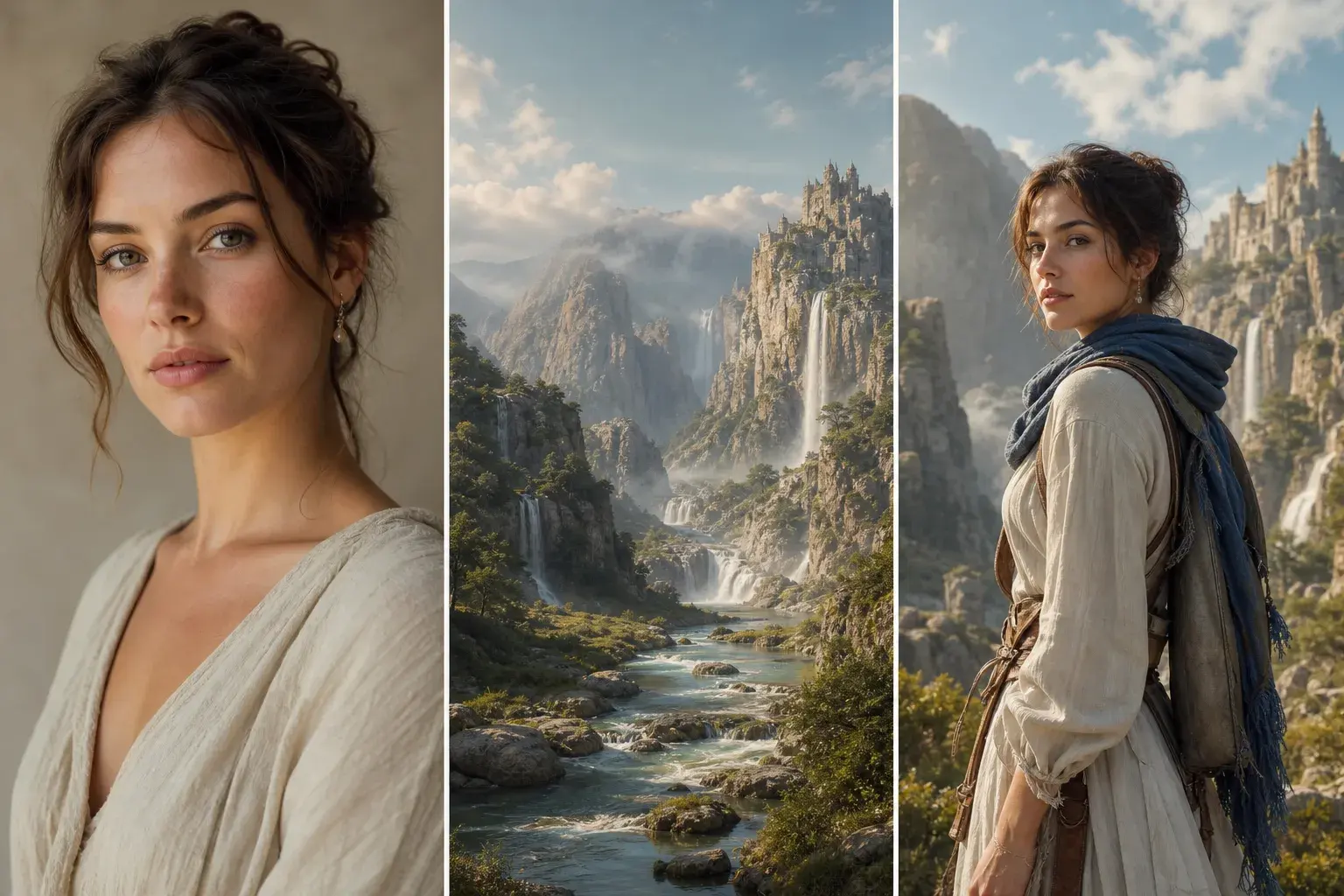
Example showing portrait and fantasy references with their combined resultInspiration example

Portrait + Fantasy

See how two references can guide one fantasy character.

How to use it

How to use the Pet AI Generator in three steps

A pet AI generator in this workspace does not paste a costume over a photo. It treats the pet as the identity reference and the second image as creative context, then generates a new composition. The result can vary between runs, so important fur patterns and anatomy still need a careful review.

  1. STEP 01

    Upload the pet and creative reference

    Put a sharp pet photo in Image 1, then upload one scene, costume, lighting, or palette reference as Image 2. Keep eyes, ears, muzzle, coat markings, and the pet's outline visible.

  2. STEP 02

    Assign each image a role in the prompt

    Tell the model that Image 1 protects the pet's identity and Image 2 supplies one creative direction. Name the eye color, ear shape, coat pattern, collar, or proportions that must survive.

  3. STEP 03

    Generate, inspect, and download

    Generate the new portrait, then check the face, fur pattern, paws, tail, costume edges, scale, and ground contact. Download only after the pet still reads as the intended subject.

Why use two references

Why choose this pet AI generator?

These four practical principles explain why the pet AI generator gives each image one clear job before it generates a new composition.

01

The model reads the pet as the identity anchor

Image 1 supplies visual evidence such as muzzle shape, ear position, coat pattern, eye color, and body proportions. The prompt should name the two or three traits that matter most instead of asking the model to preserve everything equally.

02

The second reference becomes creative context

Image 2 should contribute one coherent job: a location, costume, lighting setup, palette, or illustration direction. It is guidance for a new scene, not a layer pasted over the original pet photo.

03

The prompt resolves conflicts between the references

A relationship-first prompt explains which pet details must survive and which environmental details may change. Compatible camera angles and simple poses reduce the chance of distorted paws, duplicated tails, or clothing that hides the face.

04

A generated portrait still needs a pet-specific review

Inspect the face, coat markings, ears, limb count, tail, scale, ground contact, and any costume edge. Regenerate or correct one concrete problem at a time rather than assuming the same inputs will always produce the same result.

Six ideas to try

See how six pet AI generator scenes use both references

Each story keeps the user goal, both input roles, and generated result visible. Open the details for the prompt goal, review checklist, failure risk, and recorded provenance.

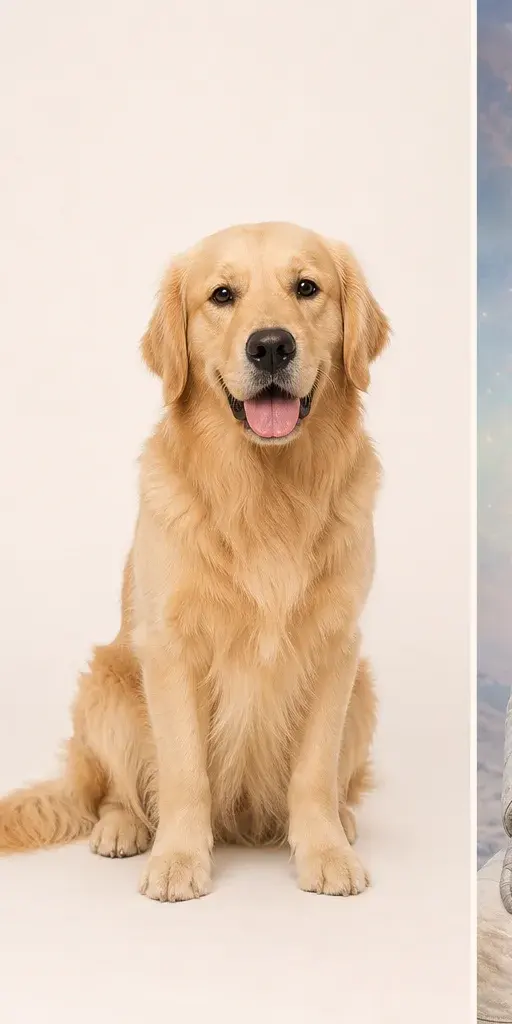
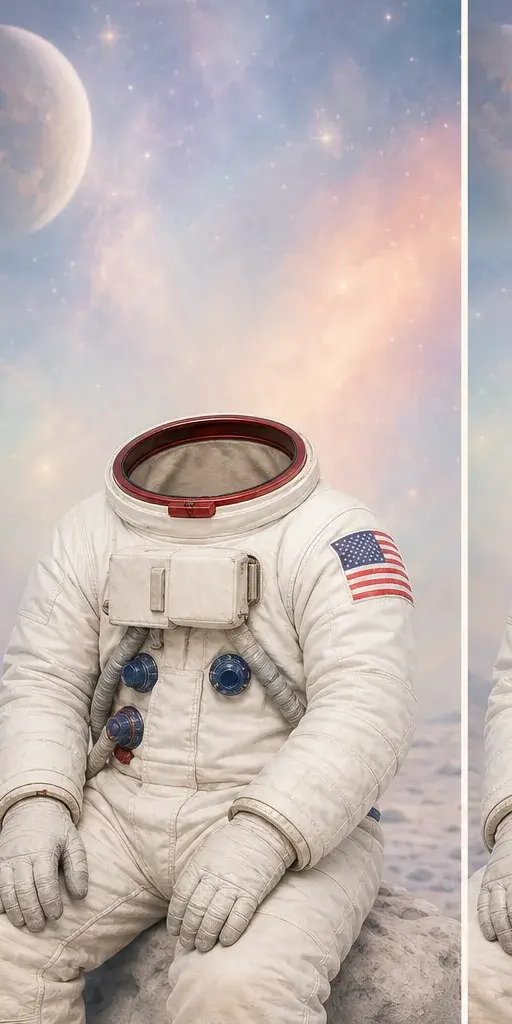
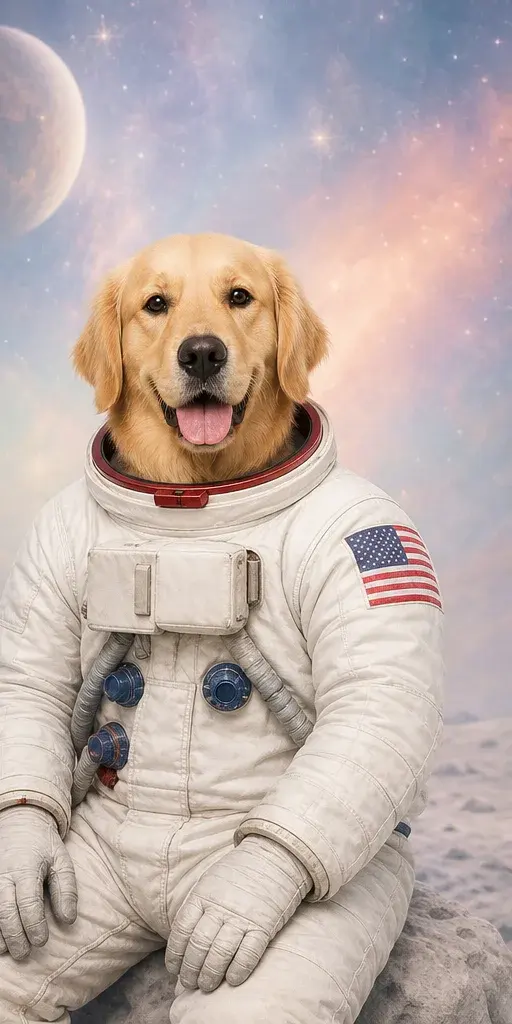
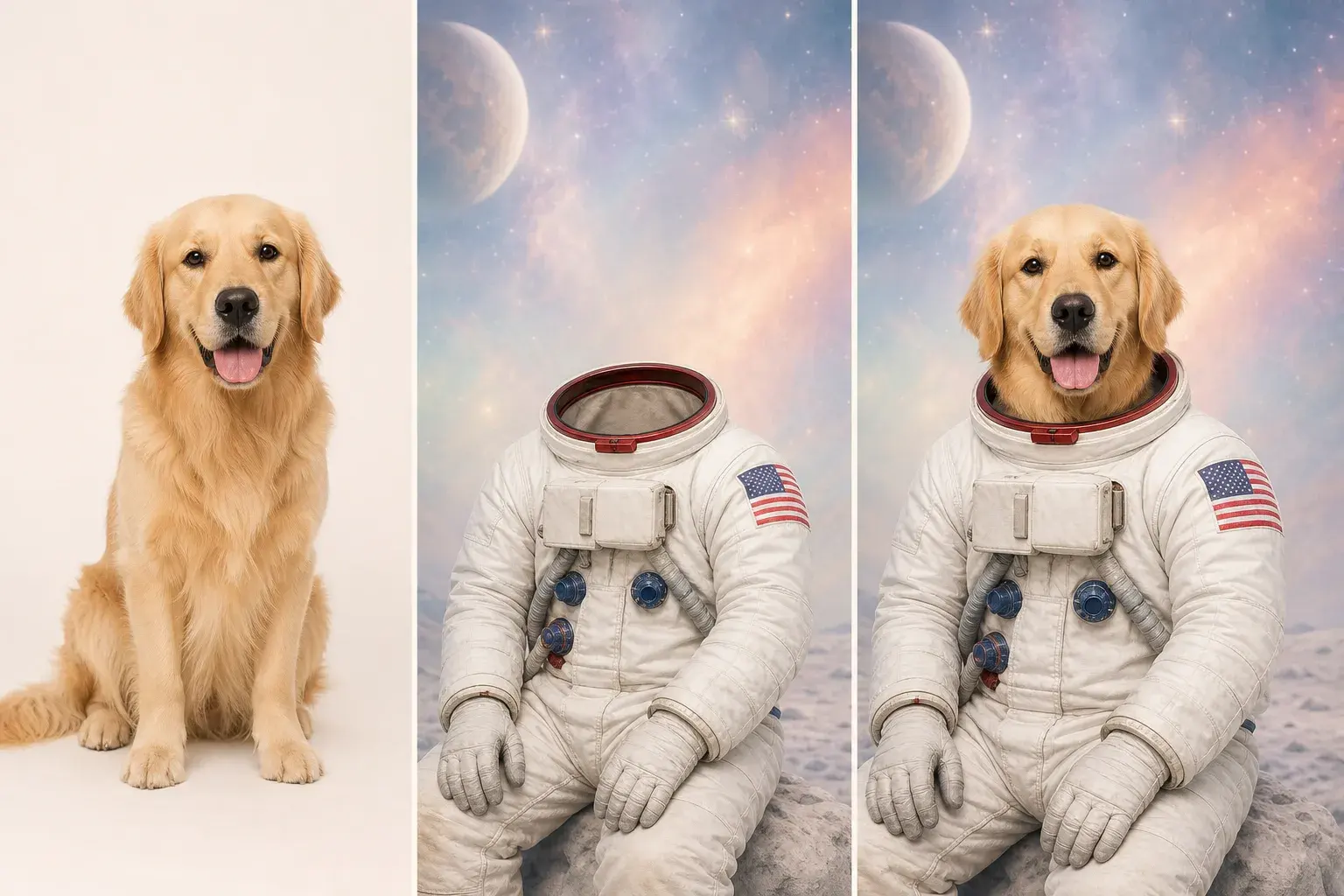
Project-owned golden retriever, astronaut reference, and generated pet portrait triptych
Two references + generated result

Golden retriever + astronaut concept

A recognizable pet becomes the single subject of a playful space portrait instead of being pasted over a costume reference.

User goal
For an imaginative pet keepsake, Image 1 anchors the retriever's identity, Image 2 supplies the astronaut concept, and the result becomes a reviewable gift-portrait direction.
Image 1 role
Anchor the retriever's face, golden coat, dark eyes, ear shape, muzzle, and body proportions.
Image 2 role
Supply the spacesuit construction, cool cabin light, window shape, and weightless atmosphere.
Generated result
The result is a newly generated cabin portrait with coordinated costume, light, and pose rather than a cut-and-paste edit.
View inputs and review notes
Prompt goal
Fit the astronaut concept naturally around the animal while keeping the eyes and muzzle clear and the pet as the only hero subject.
Review checklist
Face and coat identity; Four plausible paws; Costume edges around fur
Common failure
Suit seams can blend into fur, hide the ears, or change the muzzle when the costume request carries too much detail.
Generation record
OpenAI image generation. Exact model ID not retained.

Project-owned synthetic demonstration generated with OpenAI; not a customer result, live benchmark, or repeatability promise. Provenance: pet-astronaut-triptych.

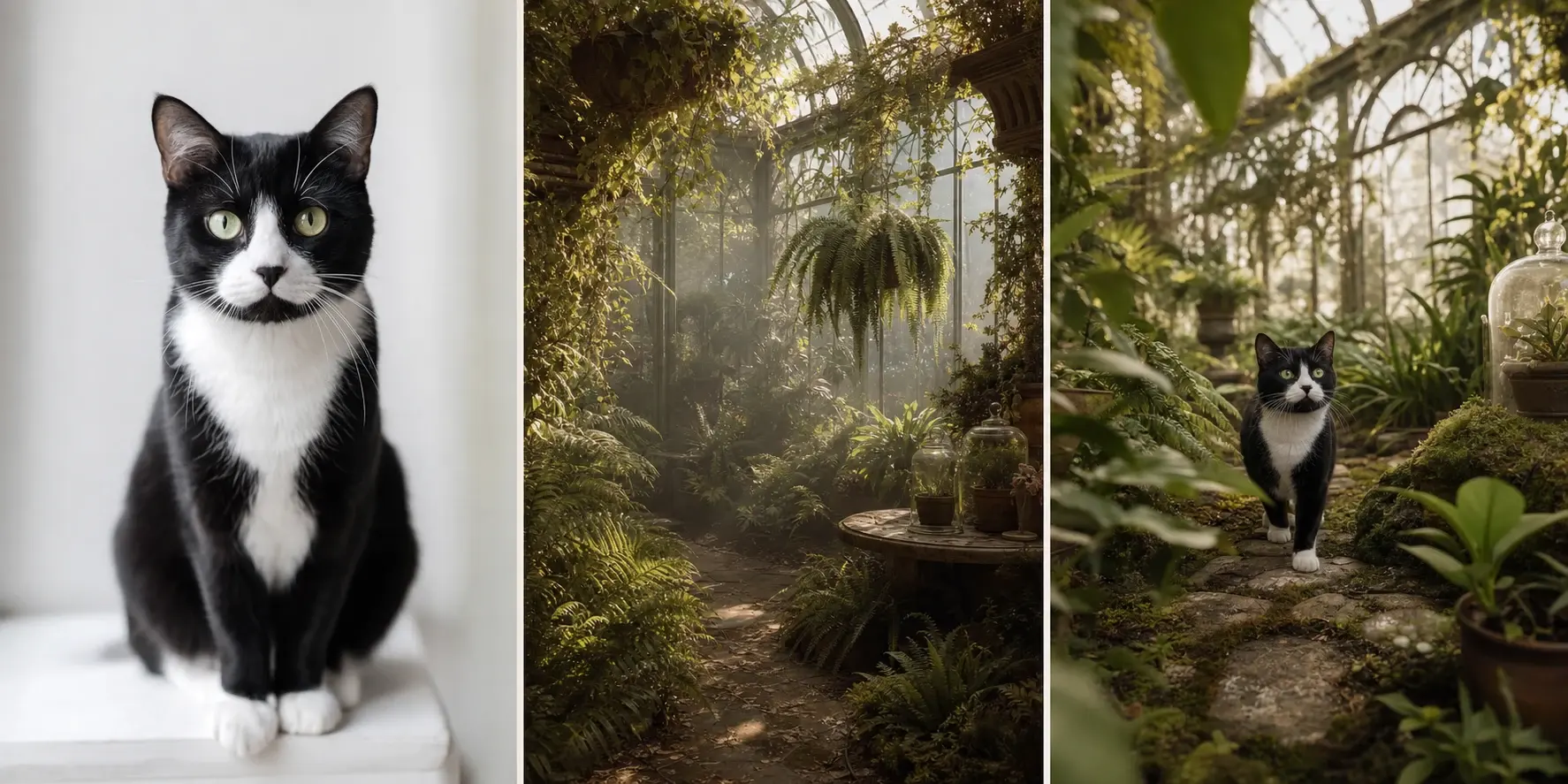
Project-owned tuxedo cat, greenhouse reference, and generated botanical pet portrait triptych
Two references + generated result

Tuxedo cat + botanical greenhouse

A focused environment reference changes the setting and light while the cat's face and chest pattern remain reviewable.

User goal
For a botanical pet portrait, Image 1 protects the cat's face and markings, Image 2 supplies greenhouse light and foliage, and the result becomes a calm decorative concept.
Image 1 role
Preserve the cat's tuxedo markings, green eyes, whiskers, upright ears, compact scale, and seated posture.
Image 2 role
Guide the glasshouse structure, filtered sunlight, leaf density, stone floor, and humid green palette.
Generated result
The generated scene connects the cat to the floor and surrounding foliage while using the second image only as environmental direction.
View inputs and review notes
Prompt goal
Place the cat naturally inside the greenhouse with believable ground contact and keep plants behind, not across, the face.
Review checklist
Chest marking continuity; Whisker and ear edges; Scale against the floor
Common failure
Dense leaves may cross the face, duplicate whiskers, or make the animal too large for the architectural perspective.
Generation record
OpenAI image generation. Exact model ID not retained.

Project-owned generated demonstration created with OpenAI; not a user commission, customer result, or benchmark. Provenance: pet-greenhouse-triptych.

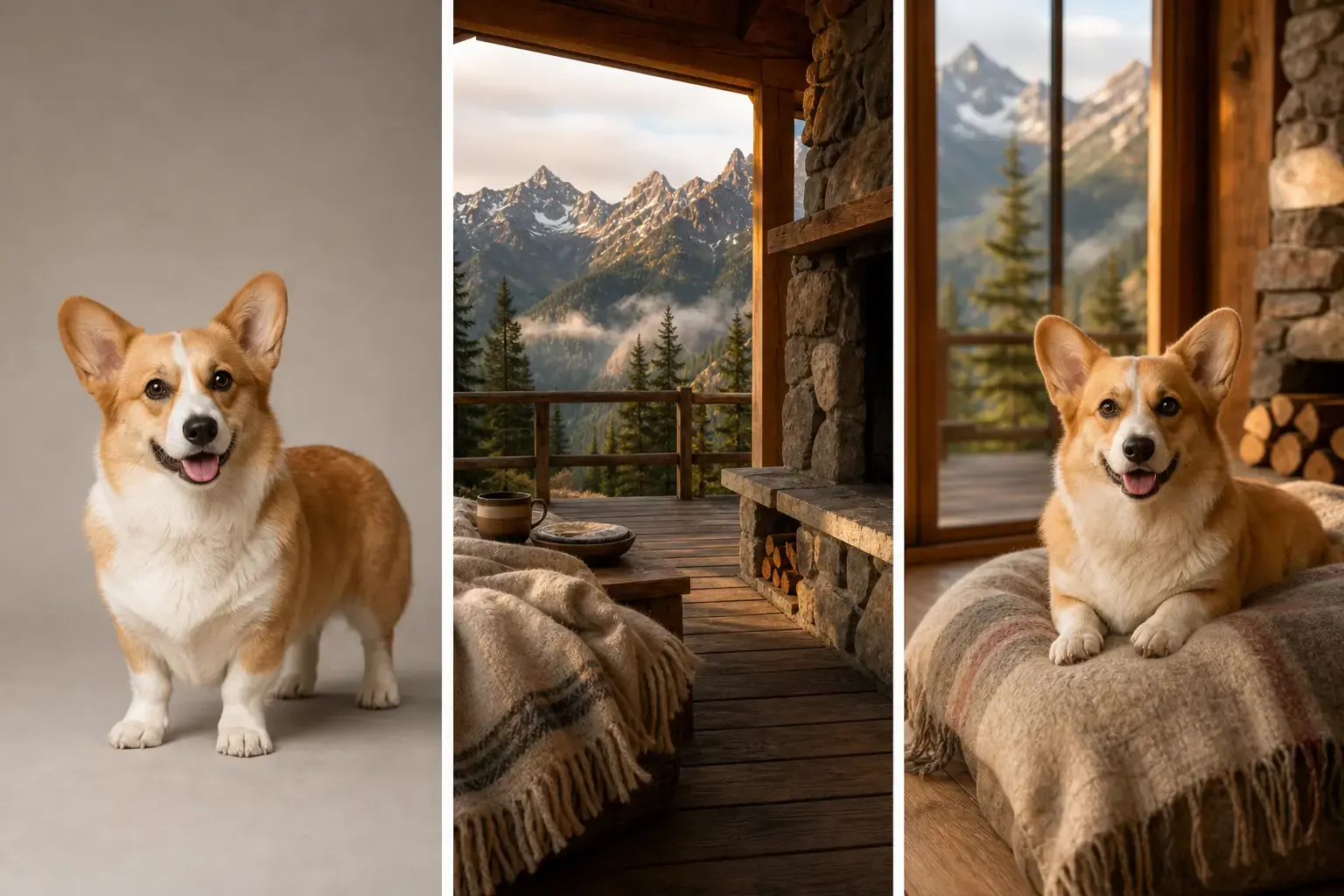
Project-owned corgi, alpine cabin reference, and generated winter pet portrait triptych
Two references + generated result

Corgi + alpine cabin

A short-legged corgi is moved into a winter cabin scene while its ears, blaze, and compact proportions stay explicit.

User goal
For a seasonal pet image, Image 1 anchors the corgi's ears, blaze, and proportions, Image 2 supplies the alpine cabin, and the result becomes a winter portrait direction.
Image 1 role
Anchor the corgi's white facial blaze, upright ears, amber coat, short legs, expression, and sturdy body shape.
Image 2 role
Provide the timber cabin, snowy window, woven blanket, warm firelight, and restrained winter palette.
Generated result
The generated composition matches warm interior light to the coat and gives the dog convincing contact with the blanket and floor.
View inputs and review notes
Prompt goal
Create a cozy indoor portrait with the corgi resting near the window, realistic leg length, and no clothing over the face.
Review checklist
Facial blaze; Leg length and paw count; Warm and cool light balance
Common failure
The model may lengthen the legs, mirror the facial blaze, or add decorative winter clothing that hides identifying fur.
Generation record
OpenAI image generation. Exact model ID not retained.

Project-owned synthetic demonstration generated for this site; output details can vary and require visual review. Provenance: pet-corgi-alpine-triptych.

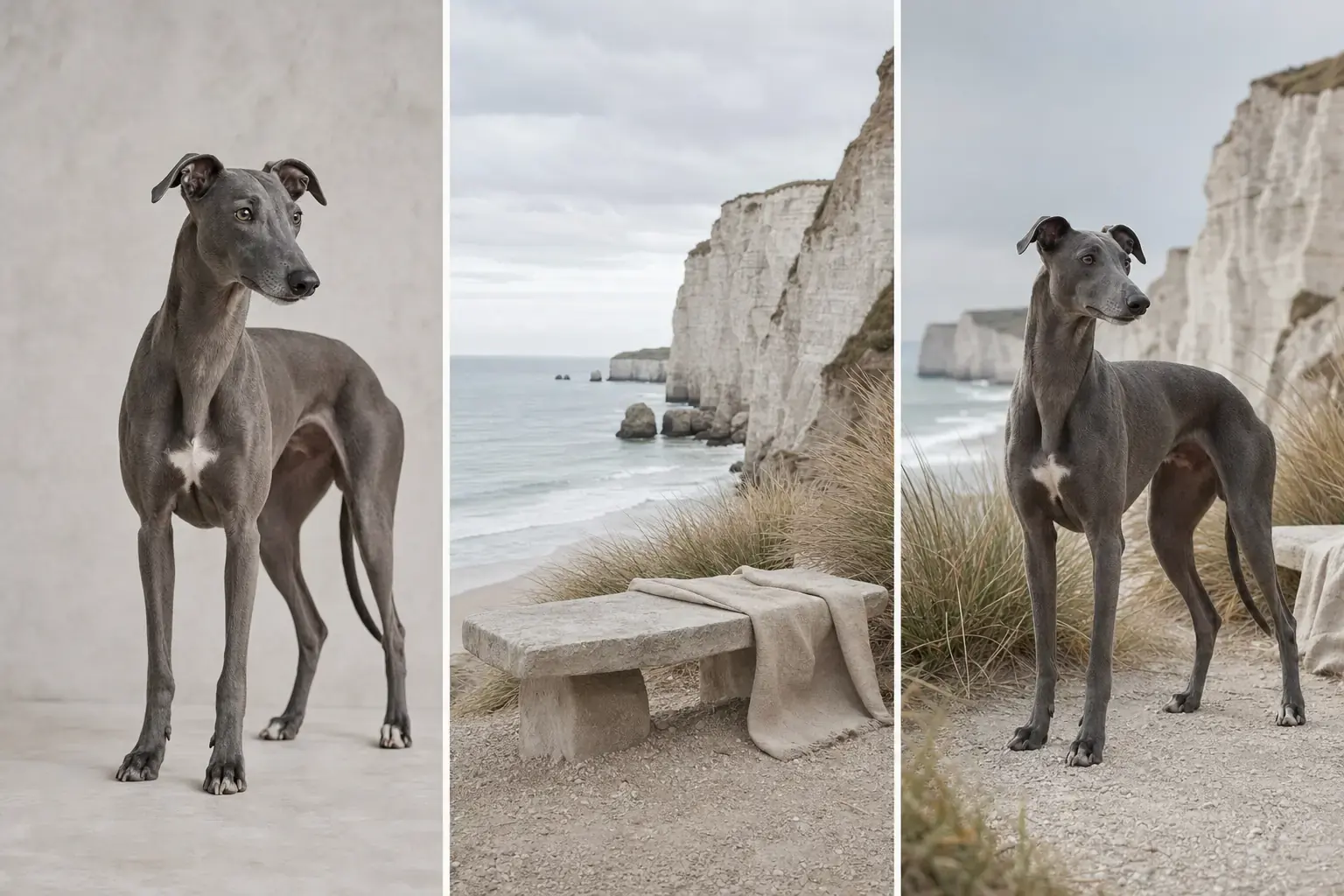
Project-owned greyhound, coastal editorial reference, and generated seaside pet portrait triptych
Two references + generated result

Greyhound + coastal editorial scene

A minimal coastal reference tests whether a long, lean silhouette can survive a stronger editorial change in light and setting.

User goal
For a quiet remembrance concept, Image 1 protects the greyhound's long silhouette, Image 2 supplies restrained coastal light, and the result becomes an editorial keepsake direction.
Image 1 role
Preserve the greyhound's narrow face, rose ears, deep chest, long limbs, pale coat, and calm standing pose.
Image 2 role
Contribute wind-shaped grass, pale cliffs, overcast side light, muted fabric tones, and open coastal framing.
Generated result
The result is a new editorial photograph with coordinated wind, posture, and light rather than a literal transfer of background pixels.
View inputs and review notes
Prompt goal
Build an elegant full-body portrait that keeps breed anatomy accurate and uses the coast as context rather than visual clutter.
Review checklist
Long-limbed anatomy; Ear and face shape; Ground contact on grass
Common failure
Long legs may bend unnaturally, paws may disappear in grass, or the face may broaden into a different breed.
Generation record
OpenAI image generation. Exact model ID not retained.

Project-owned synthetic demonstration generated for explanation; not a customer photograph or breed-accuracy benchmark. Provenance: pet-greyhound-coast-triptych.

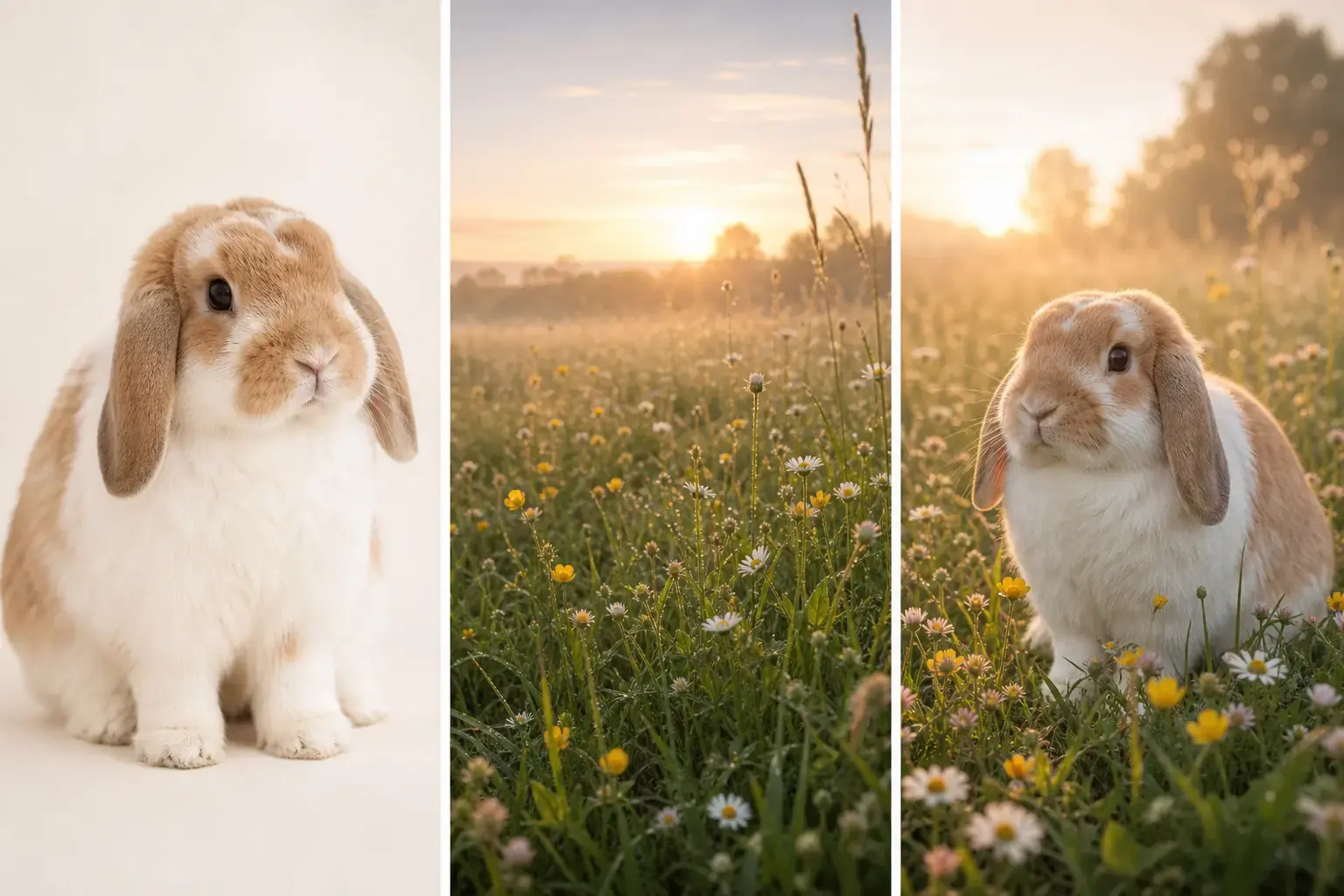
Project-owned rabbit, wildflower meadow reference, and generated spring pet portrait triptych
Two references + generated result

Rabbit + wildflower meadow

A small rabbit and low meadow reference show why scale, ear shape, and foreground placement need precise instructions.

User goal
For a gentle pet illustration, Image 1 anchors the rabbit's scale and ear shape, Image 2 supplies the low meadow viewpoint, and the result becomes a soft portrait concept.
Image 1 role
Keep the rabbit's upright ears, gray-brown coat, white nose, dark eyes, compact body, and natural crouched posture.
Image 2 role
Guide the low wildflowers, dawn haze, backlight, shallow depth of field, and soft spring color palette.
Generated result
The generated image uses atmospheric light from the meadow and keeps the animal as a small, readable focal point.
View inputs and review notes
Prompt goal
Place the rabbit among low flowers without enlarging it, hiding its feet, or letting stems cross its eyes and nose.
Review checklist
Ear count and shape; Rabbit-to-flower scale; Clear eyes and feet
Common failure
Flowers can become oversized, ears can duplicate, or the animal can take on generic storybook anatomy instead of the source traits.
Generation record
OpenAI image generation. Exact model ID not retained.

Project-owned generated demonstration; it explains reference roles and does not promise the same animal identity on every run. Provenance: pet-rabbit-meadow-triptych.

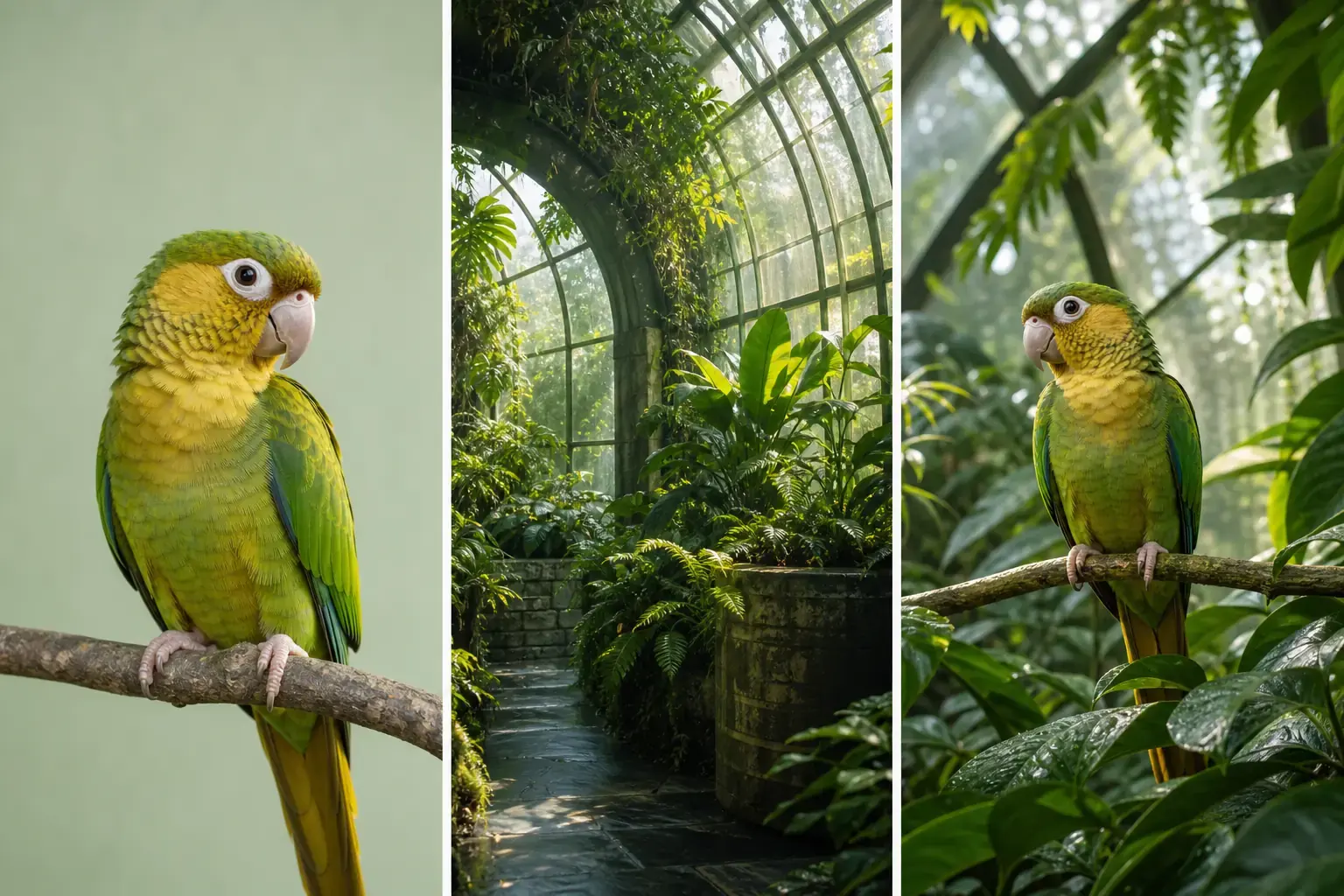
Project-owned parrot, tropical conservatory reference, and generated botanical bird portrait triptych
Two references + generated result

Parrot + tropical conservatory

A colorful bird example makes feather boundaries, perch contact, and separation from a similarly colored environment easy to inspect.

User goal
For colorful pet content, Image 1 protects the parrot's plumage and perch contact, Image 2 supplies the conservatory, and the result becomes a botanical social-visual direction.
Image 1 role
Anchor the parrot's red crown, blue wing feathers, curved beak, eye ring, feet, scale, and alert posture.
Image 2 role
Supply iron greenhouse arches, tropical leaves, humid window light, a natural branch, and layered green depth.
Generated result
The generated composition coordinates feather highlights with window light and builds a new branch-and-glass setting around the subject.
View inputs and review notes
Prompt goal
Create a conservatory portrait with the bird clearly separated from foliage and both feet gripping one plausible perch.
Review checklist
Feather color pattern; Beak and eye ring; Two feet on one perch
Common failure
Bright leaves may merge with wing edges, toes may duplicate, or feather colors may be redistributed across the body.
Generation record
OpenAI image generation. Exact model ID not retained.

Project-owned synthetic demonstration; not a wildlife photograph, customer result, or claim of zoological precision. Provenance: pet-parrot-conservatory-triptych.

Prompt starters

Three directions to adapt

Open one starting point, then replace its preservation and change instructions with details from your own two references.

Pet + character concept

Keep the pet from Image 1 recognizable, including its face, coat pattern, and proportions. Use the costume and setting from Image 2 as inspiration, fitted naturally around the animal without hiding its eyes or muzzle.

Pet + outdoor scene

Place the pet from Image 1 into the environment shown in Image 2. Match the direction of light and ground contact while preserving realistic anatomy and the pet's distinctive markings.

Pet + illustrated direction

Create an original illustrated portrait using the pet in Image 1 as the identity reference and the palette and texture of Image 2 as visual direction. Do not imitate a named artist or franchise.

Review limits

Common failure checks

Generation is variable. Use this compact review list when a result drifts, distorts a detail, or overuses the second reference.

Failure reasons and practical fixes
The pet no longer looks like the source
Shorten the style request and explicitly repeat two or three identifying traits, such as a white chest patch, folded left ear, or amber eyes.
Paws, tail, or costume anatomy looks wrong
Ask for a natural standing or seated pose and describe where the costume should stop. Review every limb before publishing the image.
The reference scene overwhelms the pet
Crop Image 2 around the useful setting and state that the pet must remain the single primary subject.

Creator perspectives

What creators say about the Pet AI Generator

Illustrative creator story — not a verified customer testimonial. These first-person scenarios show how different creators might describe a two-reference project.

Project-owned greyhound, coastal editorial reference, and generated seaside pet portrait triptych
Illustrative scenario
I wanted to explore a calm keepsake of a much-missed pet, so I used the first image for the greyhound's long silhouette and the second only for soft coastal light.

Pet remembrance concept

Illustrative creator story

Project-owned golden retriever, astronaut reference, and generated pet portrait triptych
Illustrative scenario
I imagined a playful gift portrait, using the pet photo to protect the retriever's face and the astronaut reference to guide the costume and cabin setting.

Creative gift concept

Illustrative creator story

Project-owned parrot, tropical conservatory reference, and generated botanical bird portrait triptych
Illustrative scenario
I planned a colorful pet-content image and kept the parrot as the single subject while the conservatory reference supplied only foliage, light, and atmosphere.

Pet content concept

Illustrative creator story

Frequently asked questions

Everything you need to know about the Pet AI Generator

Upload the clearest pet photo as Image 1 and a scene, costume, or lighting reference as Image 2. Tell the pet AI generator which markings and facial features must stay recognizable, then describe the single creative job that the second image should perform.